Diffusing the Relationship Bomb in Volunteer Leadership
Volunteer organizations are powered by passion, goodwill, and a shared sense of purpose. But they are also powered by relationships. Unlike corporate settings, there is no hierarchy, compensation, or formal authority to fall back on. When relationships crack in a volunteer environment, the damage can be immediate and lasting. I have learned this the hard way.
Volunteer organizations are powered by passion, goodwill, and a shared sense of purpose. But they are also powered by relationships. Unlike corporate settings, there is no hierarchy, compensation, or formal authority to fall back on. When relationships crack in a volunteer environment, the damage can be immediate and lasting. I have learned this the hard way.
Early in my volunteer leadership journey, I noticed a senior volunteer who had always been vocal and engaged suddenly go quiet. Meetings became shorter. Emails received one line replies. I told myself they were just busy. Weeks later, a small operational disagreement turned into an emotional confrontation that caught everyone off guard. What surfaced was not about that single issue at all. It was weeks of unspoken frustration about expectations, decision making, and feeling unheard. That was my first real lesson in what I now call a relationship bomb.
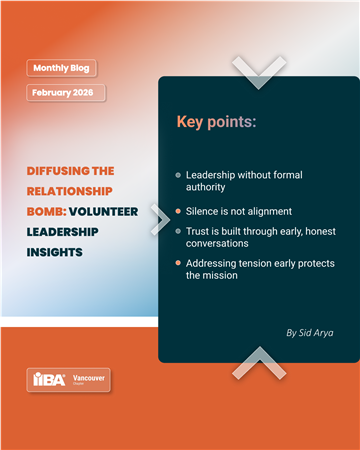
Most relationship bombs do not explode without warning. In volunteer settings, tension usually shows up subtly. A drop in participation. Side conversations replacing open discussion. Energy that feels off but is hard to pinpoint. Because everyone is donating their time, people often avoid speaking up. Leaders sometimes misread that silence as alignment. In reality, it is often discomfort waiting for a trigger.
The most effective way to defuse these situations is to notice tension early and name it gently. A simple check in can change everything. Asking how someone is feeling about the work or whether expectations are clear can surface concerns before they harden into resentment. When people feel seen and heard, the pressure reduces almost immediately.
Volunteer roles also blur professional and personal lines. You may be working with friends, mentors, or people you deeply respect. That makes conflict feel personal even when it is not. I have found it helpful to separate intent from impact. Most volunteers have positive intent. Acknowledging that upfront lowers defenses and creates space for honest conversation. When disagreement is framed around the work and the mission rather than personalities, conflict becomes constructive rather than damaging.
Tough conversations are unavoidable in volunteer leadership. Delivering bad news, resetting expectations, or addressing performance issues without formal authority can feel uncomfortable. I used to delay these conversations, hoping issues would resolve themselves. They rarely did. Preparation makes all the difference. Being clear on why the conversation matters, grounding it in observable facts, and choosing the right moment shows respect. Listening deeply often reveals that the other person has been carrying their own frustrations quietly.
Defusing relationship bombs is not about avoiding conflict. It is about being willing to step into it early, thoughtfully, and with empathy. In volunteer organizations, trust is the foundation. Leaders who protect that trust by addressing tension early create stronger teams and healthier communities. In the end, how we work together is inseparable from the impact we hope to make.
What is one conversation you have been postponing that, if handled with empathy today, could strengthen relationships and the mission tomorrow?