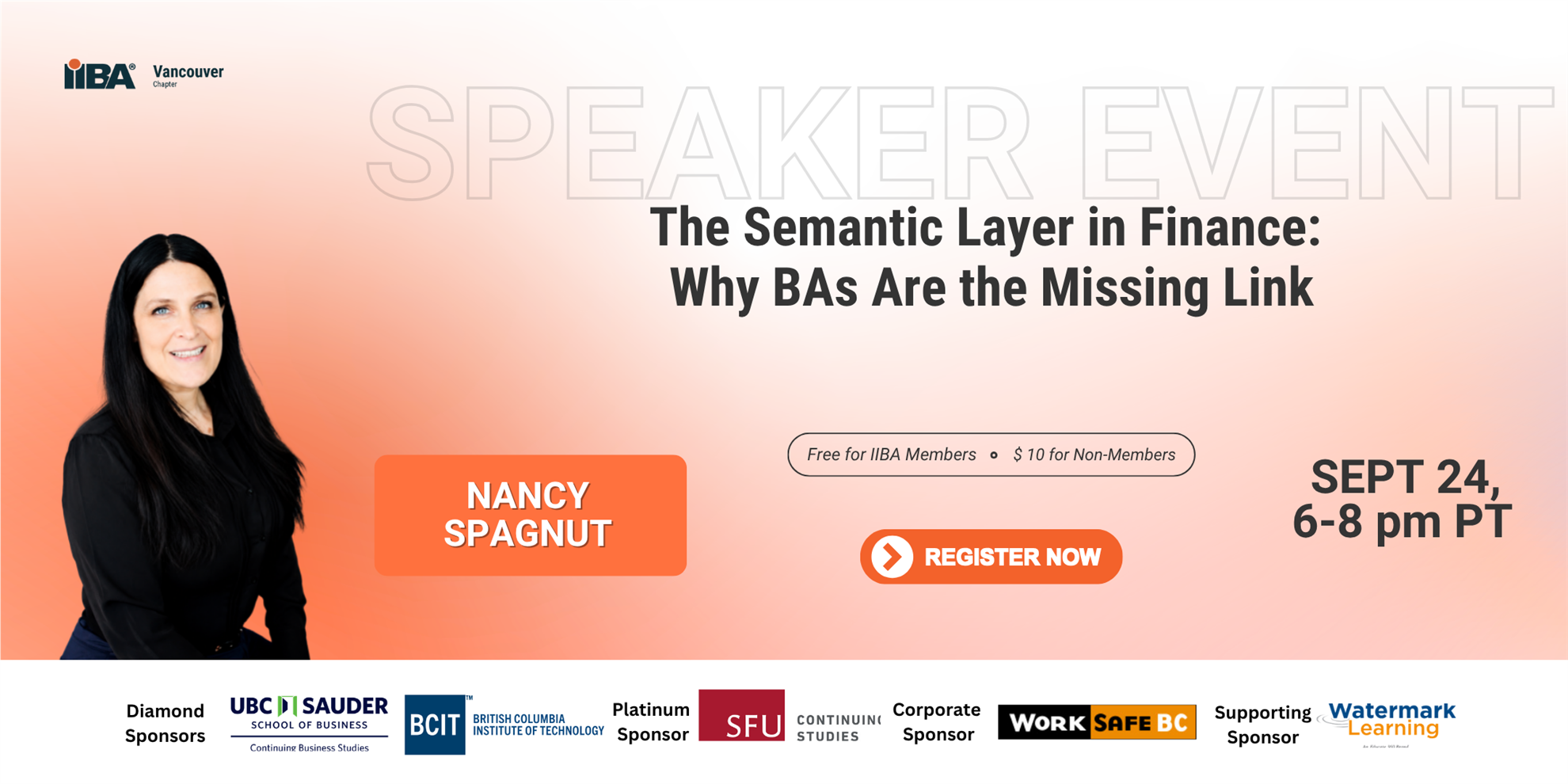
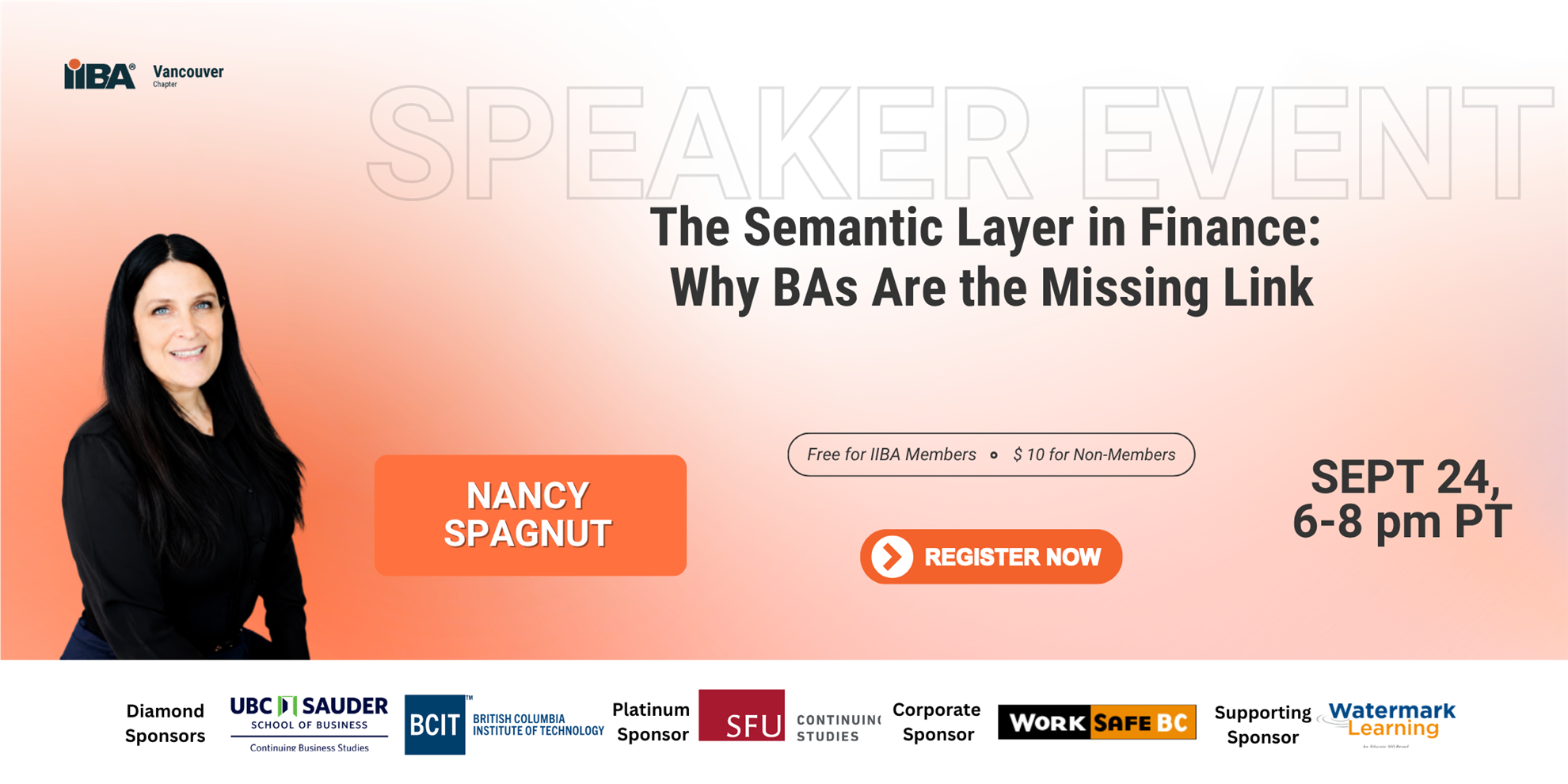
The Semantic Layer in Finance: Why BAs Are the Missing Link
Finance teams are often drowning in data — and still can't agree on what "revenue" means across systems. The semantic layer is the hidden infrastructure that makes trusted, consistent financial data possible. And in most organizations, no one is owning it. That's exactly where Business Analysts come in.
When organizations invest in data platforms, AI tools, and finance system integrations, one thing keeps quietly derailing the effort: the semantic layer. It's the shared set of definitions, business logic, and data relationships that determine how financial data is understood across the enterprise. Without it, dashboards mislead, integrations break, and finance teams spend more time reconciling numbers than generating insight.
This session draws from real-world finance integration work to show how Business
Analysts are uniquely placed to define, govern, and champion the semantic layer. We translate between technical data models and the business intent behind every metric, report, and decision — yet that role is rarely named or claimed. It's time to change that.
Analysts are uniquely placed to define, govern, and champion the semantic layer. We translate between technical data models and the business intent behind every metric, report, and decision — yet that role is rarely named or claimed. It's time to change that.
WHAT ATTENDEES WILL TAKE AWAY
- A clear, jargon-free understanding of what the semantic layer is and why finance integrations so often fail without it.
- A map of the moments in ERP, FP&A, and reporting workflows where BAs can intervene to define and protect business logic.
- A lightweight framework for surfacing semantic gaps and running alignment conversations with both finance and technical stakeholders.
- Confidence to position themselves — not just as requirements gatherers — but as data governance leaders in transformation projects.
- A clear, jargon-free understanding of what the semantic layer is and why finance integrations so often fail without it.
- A map of the moments in ERP, FP&A, and reporting workflows where BAs can intervene to define and protect business logic.
- A lightweight framework for surfacing semantic gaps and running alignment conversations with both finance and technical stakeholders.
- Confidence to position themselves — not just as requirements gatherers — but as data governance leaders in transformation projects.
Nancy Spagnut is a digital transformation and finance data integration specialist who has spent years sitting at the intersection of finance teams and enterprise data platforms. Their work spans ERP integrations, financial reporting architecture, and data governance — always with an eye on making sure the business meaning survives the journey from source system to decision-maker.
They bring real stories, honest lessons, and practical tools that BAs can use the very next day.
They bring real stories, honest lessons, and practical tools that BAs can use the very next day.
Cost
- Free for IIBA Members
- $10 for non-members
- Free for IIBA Members
- $10 for non-members
Special thanks to our sponsors!
Diamond Sponsors
UBC Sauder School of Business, Professional Growth
Platinum Sponsor
Simon Fraser University Continuing Studies
Corporate Sponsor
Supporting Sponsor
About the IIBA Vancouver Chapter
The Vancouver Chapter of the IIBA provides a variety of development and networking opportunities related to Business Analysis and is planning a variety of events through the course of the year.